
Wallboard Screws Explained: Types, Sizes and Applications
If you have come across the term wallboard screws and wondered how they differ from drywall screws, the simple answer is that both names generally refer to the same category of fastener.
“Wallboard” is another term used for gypsum-based interior boards. Depending on the country and construction market, the same material may also be called drywall, gypsum board or plasterboard.
Wallboard screws are designed to fasten these boards to wood or compatible metal framing. However, the correct screw must still be selected according to its thread type, diameter, length, finish and intended application.
This guide explains what wallboard screws are, how they compare with drywall screws and how to select a suitable option for your project.
What Are Wallboard Screws?
Wallboard Screws vs Drywall Screws
A wallboard screw is a fastener designed primarily for attaching gypsum board, drywall or plasterboard to supporting framing.
Common wallboard screw features include:
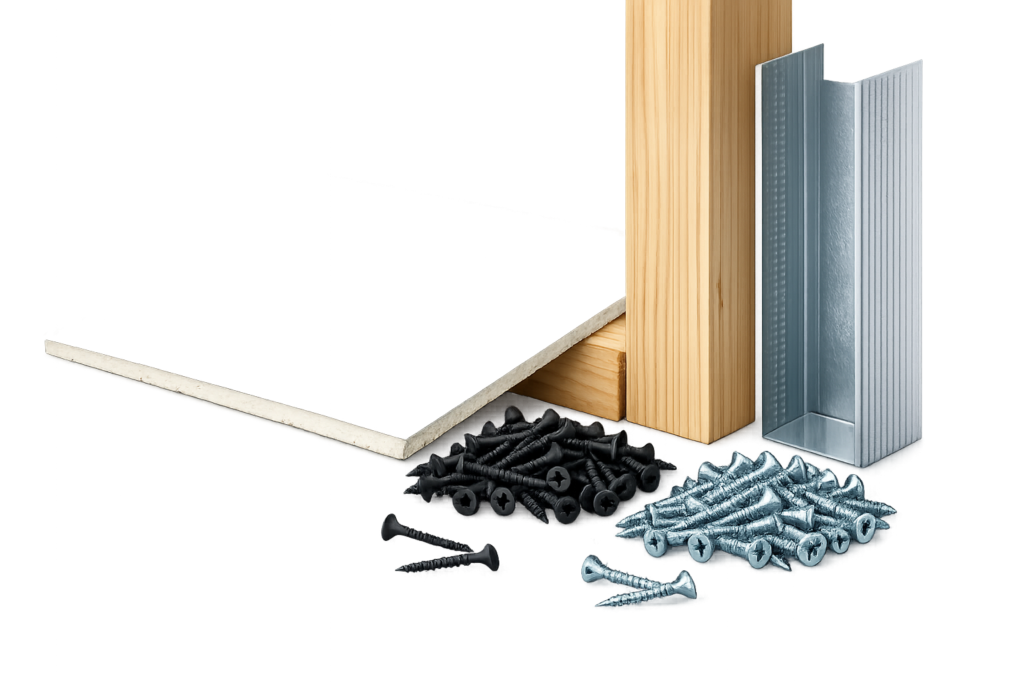
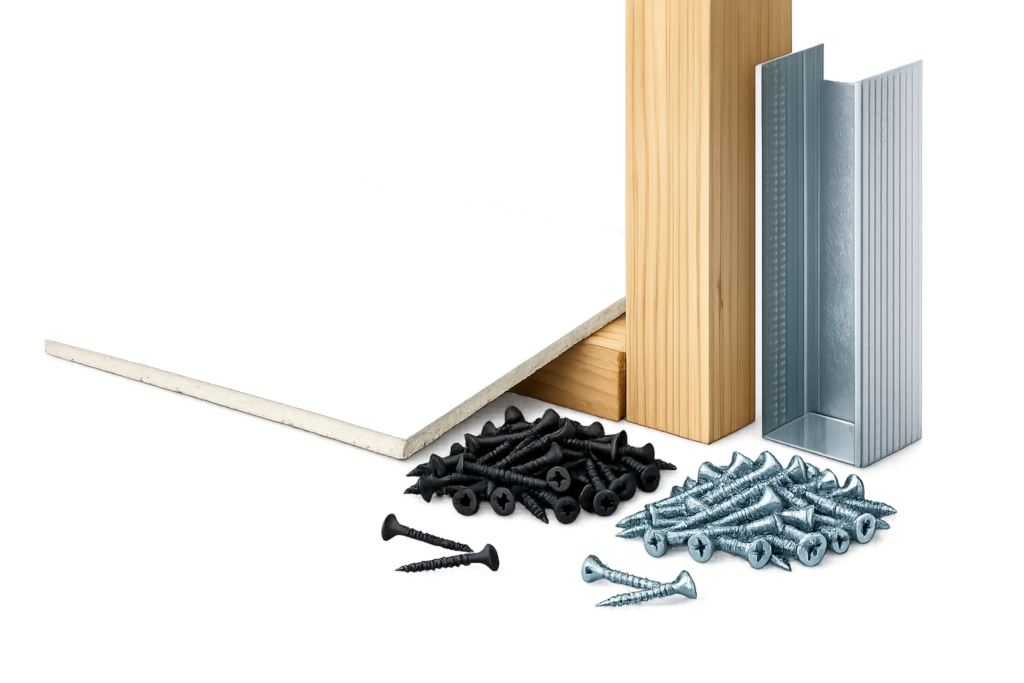
- Bugle-shaped head with a cross-recess drive — helps the screw sit neatly below the board surface without damaging the paper facing when installed to the correct depth
- Sharp point — commonly drives into wood or compatible light-gauge metal framing without pre-drilling, depending on the screw design and framing thickness
- Fine- or coarse-thread options — selected according to the framing material
- Black or zinc finish — available for different product and project requirements
- Slim, hardened body — suitable for board-fixing applications
Wallboard screws are mainly intended for interior walls, ceilings, partitions and lining systems.
In most cases, wallboard screws and drywall screws describe the same type of product.
The difference is mainly in regional or trade terminology rather than the design of the fastener.
| Term | Common usage | Product category |
|---|---|---|
| Wallboard screw | General construction and trade terminology | Gypsum board fastener |
| Drywall screw | Common in the US, India and many international markets | Gypsum board fastener |
| Plasterboard screw | Common in the UK and other markets | Gypsum board fastener |
| Sheetrock screw | Informal US usage derived from a board brand name | Gypsum board fastener |
What actually varies between individual products is not the name alone, but the:
- Thread design
- Diameter
- Length
- Head design
- Drive type
- Finish
- Framing compatibility
- Product specification
For a detailed comparison of related naming terms, read our sheetrock screws vs drywall screws guide.
Fine-Thread vs Coarse-Thread Wallboard Screws
Choosing the correct thread type is one of the most important parts of wallboard screw selection.
Coarse-thread wallboard screws
Coarse-thread screws are generally selected for fixing gypsum board to wood studs or timber framing.
Their wider and deeper thread pattern is designed to grip wood fibres effectively.
Typical uses include:
- Gypsum board fixed to wooden studs
- Timber partition frames
- Interior lining over wood battens
- Residential drywall installation using wood framing
Fine-thread wallboard screws
Fine-thread screws are generally used for fixing gypsum board to compatible light-gauge metal studs and tracks.
The closer thread pitch is designed to engage with thinner metal framing.
Typical uses include:
- Gypsum board fixed to metal studs
- Light-gauge steel partition systems
- Commercial fit-out projects
- Suspended ceiling and lining systems
Always confirm the screw specification against the thickness and type of framing material. Some heavier-gauge metal systems may require a different screw design.
For a complete explanation, see our fine-thread vs coarse-thread drywall screws guide.
Common Wallboard Screw Sizes
Wallboard screws are identified by their nominal diameter and length. The correct size depends on:
- Board thickness
- Number of board layers
- Framing material
- Required penetration
- Installation system
- Manufacturer or project specification
Common ScrewBee size combinations include:
| Nominal diameter | Available lengths |
|---|---|
| 3.5 mm | 16 mm, 19 mm, 25 mm, 32 mm, 38 mm and 50 mm |
| 4.2 mm | 19 mm, 25 mm, 32 mm, 38 mm, 50 mm and 60 mm |
| 4.8 mm | 50 mm and 60 mm |
The selected screw must pass through the wallboard and provide the required engagement with the supporting framing.
Avoid selecting a screw only because it is longer. An unnecessarily long screw can slow installation and may interfere with concealed services behind the board.
For a more detailed size breakdown, review our drywall screw sizes guide.
How to Select the Correct Wallboard Screw Length
The right screw length depends on the complete board-and-frame assembly.
Single-layer wallboard
For a single board layer, the screw must pass through the board and engage sufficiently with the wood or metal framing behind it.
Multiple board layers
Double-layer and fire-rated systems usually require a longer fastener because the screw must pass through both board layers before reaching the framing.
Wood framing
The selected coarse-thread screw should provide the penetration required by the board system and project specification.
Metal framing
The fine-thread screw must be compatible with the metal thickness. Standard sharp-point screws are generally intended for compatible light-gauge metal framing, while thicker steel may require a different point or screw category.
Black and Zinc Wallboard Screws
Wallboard screws are commonly supplied in black and zinc finishes.
Black finish
Black wallboard screws are commonly selected for standard dry interior board-fixing work.
Typical applications include:
- Internal walls
- Ceilings
- Residential partitions
- Commercial fit-outs
- Dry indoor gypsum board systems
Zinc finish
Zinc-finished screws provide a different level of surface protection compared with standard black-finished screws.
Their suitability depends on:
- The coating specification
- Indoor exposure conditions
- Storage environment
- Project requirements
- Manufacturer recommendations
A zinc finish should not automatically be treated as approval for exterior, wet-area or structural use. Always confirm the product specification before using it in demanding environments.
Selected ScrewBee finishes are salt-spray tested for up to 124 hours, subject to the applicable product specification.
Selected ScrewBee finishes are salt-spray tested for up to 124 hours, subject to the applicable product specification.
Common Applications of Wallboard Screws
Wallboard screws are widely used in interior construction and finishing work.
Typical applications include:
- Gypsum board wall installation
- Drywall partitions
- Plasterboard fixing
- False ceiling installation
- Interior wall lining
- Residential fit-out work
- Commercial partition systems
- Wood-stud framing
- Light-gauge metal-stud framing
- Multi-layer board systems
Standard wallboard screws are primarily board-fixing fasteners. They should not automatically be used for structural timber joints, heavy-load connections or exterior construction unless the product is specifically rated for that application.
How to Choose the Right Wallboard Screw
Common Mistakes to Avoid
Follow these steps when selecting wallboard screws.
1. Identify the board type
Confirm whether the project uses:
- Standard gypsum board
- Fire-resistant board
- Moisture-resistant board
- Acoustic board
- Multiple board layers
The board type and thickness affect the required screw length.
2. Identify the framing material
Determine whether the wallboard will be fixed to:
- Wood studs
- Timber battens
- Light-gauge metal studs
- Metal ceiling framing
3. Match the thread type
Use:
- Coarse thread for compatible wood framing
- Fine thread for compatible light-gauge metal framing
4. Select the correct length
Choose a screw long enough to pass through the board and provide the required engagement with the framing.
5. Confirm the finish
Select the finish according to the intended environment, storage requirements and project specification.
6. Check the product specification
Before purchasing in bulk, confirm:
- Diameter
- Length
- Thread type
- Finish
- Head and drive design
- Framing compatibility
- Packaging quantity
- Applicable quality requirements
Using coarse-thread screws for metal framing
Coarse-thread screws are generally intended for wood. They may not engage correctly with compatible thin metal framing.
Using fine-thread screws for timber without checking suitability
Fine-thread screws may not provide the same wood grip as a suitable coarse-thread option.
Selecting length based only on board thickness
The screw must also provide the required engagement with the framing behind the board.
Driving the screw too deeply
The bugle-shaped head should sit slightly below the board surface without tearing through the paper facing.
Using standard wallboard screws for structural work
Standard drywall or wallboard screws are generally non-structural unless a specific product rating states otherwise.
Assuming zinc finish means exterior-rated
Exterior suitability depends on the complete coating and product specification, not colour or appearance alone.
Wallboard Screw Selection Checklist
Before ordering wallboard screws, check:
- Board type and thickness
- Number of board layers
- Wood or metal framing
- Required thread type
- Required diameter and length
- Finish specification
- Framing thickness
- Installation environment
- Product documentation
- Packaging and bulk quantity
View the drywall screw product page for available sizes, finishes and technical specifications.
Dealers, contractors and bulk buyers can also review our drywall screw supplier page before comparing manufacturers and supply options.
Frequently Asked Questions
Are wallboard screws the same as drywall screws?
Yes. In most construction and trade contexts, wallboard screws and drywall screws refer to the same category of fastener used for gypsum board installation.
Are plasterboard screws also the same product?
Plasterboard screws generally belong to the same product category. “Plasterboard” is simply another regional name for gypsum board.
Can wallboard screws be used with wood studs?
Yes. Coarse-thread wallboard screws are generally selected for compatible wood studs and timber framing.
Can wallboard screws be used with metal studs?
Yes. Fine-thread wallboard screws are generally selected for compatible light-gauge metal studs. Confirm the screw specification against the framing thickness.
Do wallboard screws require pre-drilling?
In many standard wood and compatible light-gauge metal applications, pre-drilling is not required. However, suitability depends on the screw design and framing material.
Which wallboard screw finish is better?
Neither finish is automatically better for every project. Black screws are commonly used for standard dry indoor board fixing, while zinc-finished products provide a different level of surface protection. Selection should be based on the product and project specification.
What wallboard screw sizes are available?
Common ScrewBee nominal diameters include 3.5 mm, 4.2 mm and 4.8 mm, with available lengths ranging from 16 mm to 60 mm depending on the diameter.
Can wallboard screws be used outdoors?
Standard wallboard screws are generally intended for interior applications. Do not use them outdoors unless the product is specifically rated for the required exposure conditions.
Are wallboard screws suitable for structural timber work?
Standard wallboard screws should not be treated as structural fasteners. Use an appropriately rated wood or structural screw for load-bearing timber connections.
Conclusion
Wallboard screws, drywall screws and plasterboard screws generally describe the same category of fastener used to attach gypsum board to framing.
The correct choice depends on the application rather than the product name. Coarse-thread screws are commonly selected for wood framing, while fine-thread screws are generally used with compatible light-gauge metal framing. Diameter, length and finish should then be selected according to the board system, framing material and project specification.
Dealers, contractors and bulk buyers can read our drywall screw supplier in India guide, while international buyers can review our drywall screw exporters page for export-related information.
You can also read our What Are Drywall Screws? guide for more information about drywall screw design, features and applications.
ScrewBee manufactures wallboard and drywall screws in black and zinc finishes, with fine- and coarse-thread options across standard diameters and lengths. Products are manufactured under an ISO 9001:2015-certified quality-management system, with selected finishes salt-spray tested for up to 124 hours according to the applicable product specification.
For product specifications, size availability and bulk-order enquiries, contact ScrewBee.