
Quick Answer About Fine vs Coarse Thread Drywall Screws
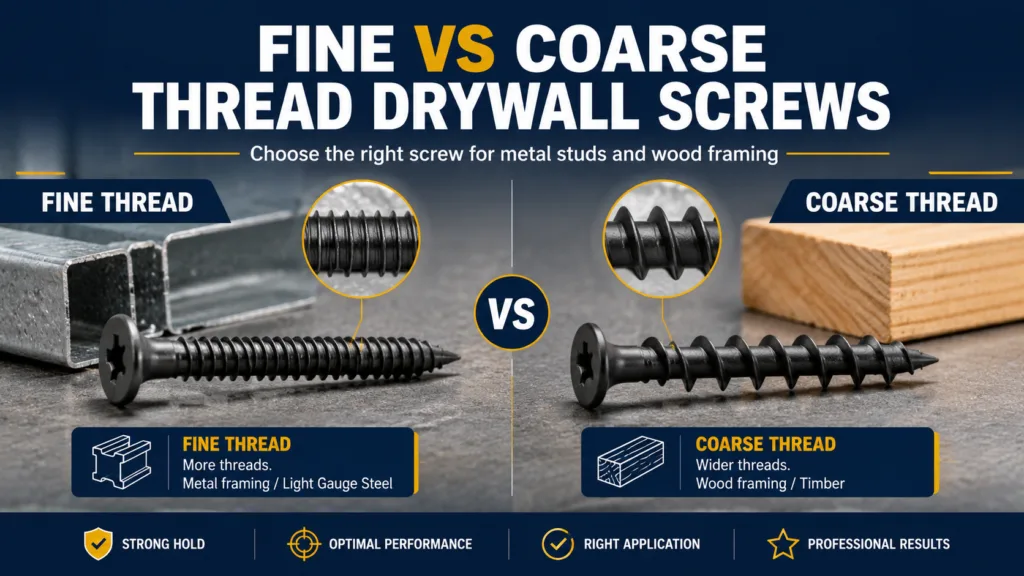
Fine vs coarse thread drywall screws are chosen based on the frame material and application. Fine thread drywall screws are commonly used for metal studs and light gauge steel framing, while coarse thread drywall screws are commonly used for wood framing because the wider thread gives better grip in wood.
For contractors, dealers, distributors, wholesalers, and bulk buyers, understanding the difference between fine and coarse thread drywall screws helps reduce wrong product selection and improves installation quality in gypsum board fixing, false ceiling work, drywall partitions, wall lining, plasterboard applications, and interior construction projects.
Introduction to Fine vs Coarse Thread Drywall Screws
Drywall screws may look similar at first, but the thread design makes a big difference in how the screw performs. The thread controls grip, holding strength, installation speed, and suitability for different frame materials.
When buyers compare fine vs coarse thread drywall screws, they should not only check the screw length or coating. They should also understand the frame material, board type, application area, screw head style, point type, coating finish, packing requirement, and bulk order need.
Many buyers search for drywall screws, gypsum board screws, plasterboard screws, wallboard screws, gypsum screws, and drywall fasteners when looking for similar products. These names may vary by market, but the buying decision depends on choosing the correct screw type for the project.
What Are Fine Thread Drywall Screws?
Fine thread drywall screws have closely spaced threads. This thread style is generally suitable for metal studs, light gauge steel framing, ceiling channels, and metal frame applications.
Because the threads are closer together, fine thread drywall screws can hold better in metal surfaces when the screw type and application are suitable. They are commonly used in interior drywall systems where gypsum board or plasterboard needs to be fixed onto metal framing.
Fine thread drywall screws are often selected by contractors and project buyers for drywall partitions, false ceiling systems, wall lining, and interior fit-out work involving metal channels or light steel frames.
What Are Coarse Thread Drywall Screws?
Coarse thread drywall screws have wider thread spacing. This thread style is generally suitable for wood framing because the wider thread can bite into wood more effectively.
For wood applications, coarse thread drywall screws help provide strong grip and better holding support. They are commonly used when gypsum board or plasterboard needs to be fixed onto wooden frames, timber supports, or similar wood-based structures.
Coarse thread drywall screws are useful for contractors, dealers, and buyers who supply screws for wood frame fixing, interior renovation, board fixing, and general drywall construction work where wood framing is involved.
Main Difference Between Fine and Coarse Thread Drywall Screws
The main difference between fine and coarse thread drywall screws is the thread spacing and application suitability.
Fine thread screws have closer threads and are usually selected for metal stud applications. Coarse thread screws have wider threads and are usually selected for wood frame applications.
This difference is important because using the wrong thread type can affect grip, installation speed, fixing strength, and project quality. A screw that works well in wood may not be the best choice for metal framing, and a screw designed for metal may not give the same grip in wood.
Fine Thread Drywall Screws for Metal Studs
Fine thread drywall screws are commonly preferred for metal studs and steel framing because the closer thread pattern supports better fastening in metal applications.
In drywall partition systems and false ceiling work, metal channels and studs are commonly used. For these applications, buyers should check whether the screw is suitable for metal framing before confirming an order.
Fine thread drywall screws are useful for gypsum board fixing, plasterboard fixing, ceiling work, wall lining, and interior partition work where metal frame support is used.
Coarse Thread Drywall Screws for Wood Framing
Coarse thread drywall screws are commonly preferred for wood framing because the wider thread gives better grip in wood. The thread bites into the wood surface and helps the screw hold the board securely.
For buyers dealing with wooden frames, timber supports, renovation work, and wood-based interior construction, coarse thread drywall screws are usually a practical choice.
Contractors and dealers should always confirm the application before selecting coarse thread drywall screws, especially for bulk orders where wrong product selection can create stock or project issues.
Coating and Head Style Also Matter
Thread type is important, but it is not the only factor. Buyers should also check coating finish and head style.
Black phosphate drywall screws are commonly used for interior drywall and ceiling applications. Zinc coated drywall screws are selected when a bright surface finish is preferred. Bugle head drywall screws are commonly used because the head shape helps the screw sit neatly on the gypsum board surface.
A reliable drywall screw supplier should explain these product differences clearly before buyers place a bulk enquiry.
How Buyers Should Choose the Right Drywall Screw
Before choosing between fine and coarse thread drywall screws, buyers should confirm the frame material first.
If the project uses metal studs or steel channels, fine thread drywall screws are usually considered. If the project uses wood framing, coarse thread drywall screws are usually considered.
Buyers should also check screw size, screw length, coating finish, head type, point type, packing requirement, quantity, and application area. These details help suppliers give better product guidance and avoid wrong screw selection.
Bulk Buyers and Supplier Support
For bulk buyers, choosing the right drywall screw type is important because the order may be used across multiple projects, dealers, distributors, or export customers.
A good supplier should provide product clarity, packing support, coating information, thread guidance, and quotation assistance. Buyers can also check drywall screw supplier support when they need help with product selection and bulk enquiry details.
For international enquiries, buyers can review drywall screw exporters support to understand export-related product guidance, packing needs, and supply assistance.
Conclusion
Fine vs coarse thread drywall screws should be selected based on the frame material and project requirement. Fine thread drywall screws are commonly used for metal studs and light steel framing, while coarse thread drywall screws are commonly used for wood framing.
For gypsum board fixing, false ceiling systems, drywall partitions, plasterboard work, wall lining, and interior construction projects, choosing the correct thread type helps improve fixing quality and reduce product selection mistakes.
Buyers should compare thread type, coating finish, head style, screw size, packing support, and supplier communication before placing a bulk enquiry. For more product details, buyers can also visit the official ScrewBee website.
Pingback: What Drywall Screw Size Should You Use? – ScrewBee Drywall Screw Guides