
Drywall Screws vs Wood Screws: Key Differences and Best Uses
Drywall screws and wood screws may look similar, but they are designed for different fastening tasks.
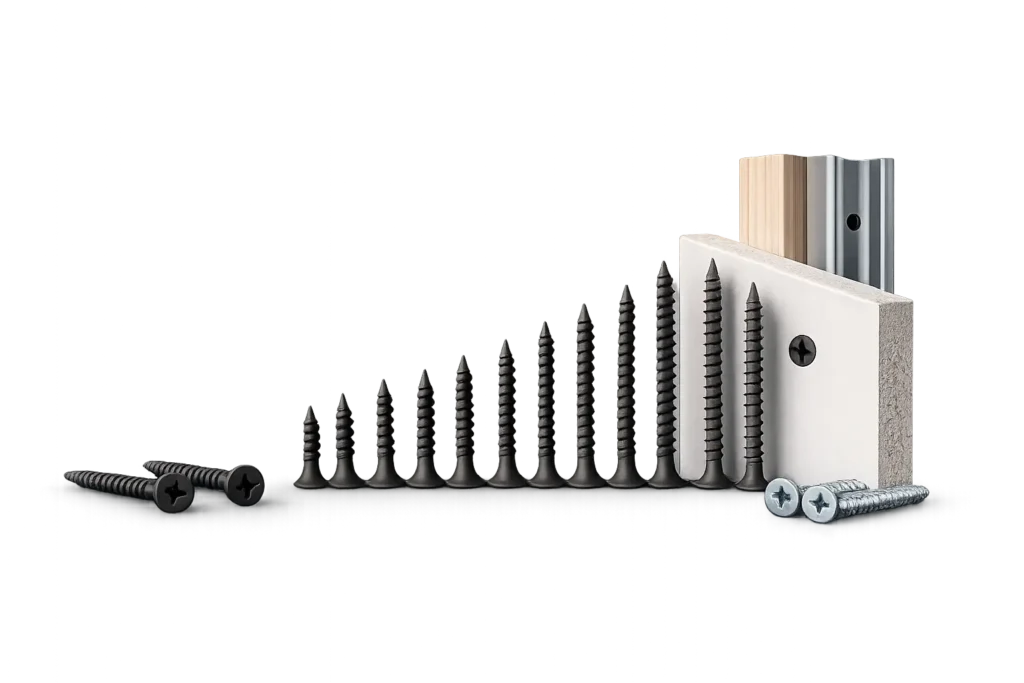
Drywall screws are made primarily for attaching gypsum board to wood studs or compatible light-gauge metal framing. ScrewBee offers black and zinc drywall screws in fine- and coarse-thread options, with nominal diameters of 3.5 mm, 4.2 mm and 4.8 mm.
Wood screws, on the other hand, are designed for joining timber, plywood, furniture components and other wood-based materials.
Using the wrong fastener can result in poor holding performance, damaged material or premature failure. The right choice depends on the materials being joined, the expected load, the installation environment, the screw design and the project requirements.
This guide compares drywall screws vs wood screws, explains their main differences and helps you select the correct fastener for drywall installation, woodworking and general construction.
What Are Drywall Screws?
Drywall screws are purpose-designed fasteners used to attach gypsum board, plasterboard or drywall panels to a supporting frame.
Typical features include:
- Bugle-shaped head
- Sharp driving point
- Fine or coarse thread
- Slim, hardened steel body
- Black or zinc finish
- Cross-recess drive
The bugle-shaped head allows the screw to sit slightly below the board surface without excessively damaging the paper facing. This creates a shallow recess that can be covered with joint compound.
Drywall screws are widely used for:
- Interior gypsum board walls
- Drywall partitions
- False ceilings
- Plasterboard installation
- Wood stud framing
- Compatible light-gauge metal framing
- Residential renovation
- Commercial fit-out projects
Their primary purpose is to fix board panels to framing. Standard drywall screws are not intended to replace structural fasteners.
For a closer look at naming and regional terminology, read our guide to sheetrock screws vs drywall screws.
What Are Wood Screws?
Wood screws are designed for joining timber and wood-based materials.
They are used with:
- Solid timber
- Softwood
- Hardwood
- Plywood
- MDF
- Particle board
- Furniture components
- Cabinets
- Shelving
- Doors and fittings
Wood screws are available in many materials, head styles, drive patterns and thread designs.
Depending on the product, a wood screw may have:
- Countersunk head
- Pan head
- Washer head
- Cross-recess, star-drive or square-drive options
- Fully threaded body
- Partially threaded shank
- Zinc coating
- Stainless-steel construction
- Exterior-rated finish
The correct wood screw depends on the wood type, material thickness, required holding strength, load and environment.
Drywall Screws vs Wood Screws: Quick Comparison
| Feature | Drywall Screws | Wood Screws |
|---|---|---|
| Primary purpose | Attaching gypsum board | Joining wood materials |
| Common head style | Bugle head | Countersunk, pan or washer head |
| Thread design | Fine or coarse | Designed specifically for wood |
| Typical body | Slim and hardened | Available in many diameters and strengths |
| Common drive | Cross-recess | Cross-recess, star-drive, square-drive and others |
| Common substrates | Drywall with wood or metal framing | Timber and wood-based materials |
| Structural suitability | Standard types are non-structural | Depends on product rating |
| Exterior suitability | Usually intended for interiors | Exterior-rated options are available |
| Typical uses | Walls, ceilings and partitions | Furniture, cabinets, timber and joinery |
Main Differences Between Drywall Screws and Wood Screws
Intended Application
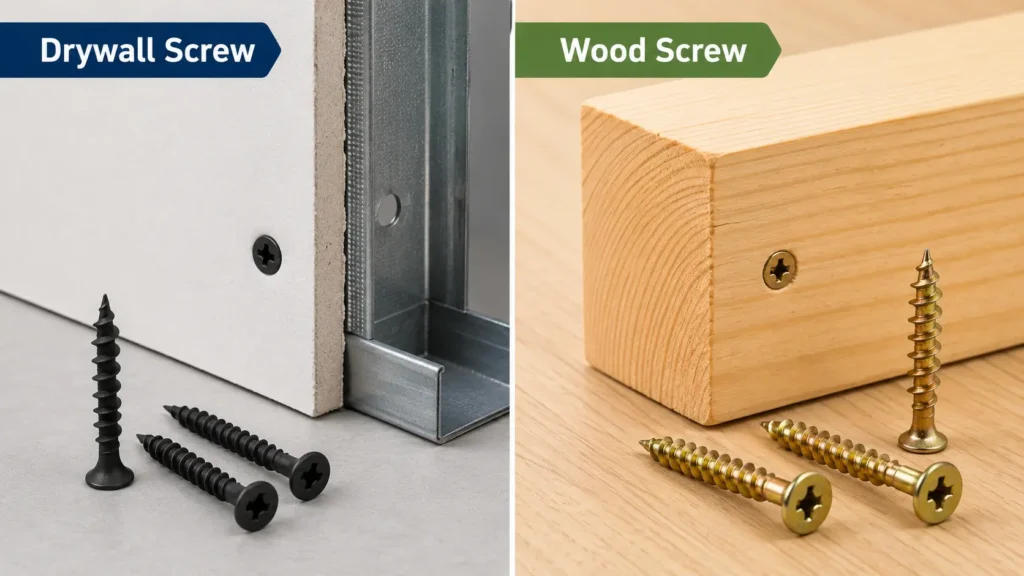
Drywall screws are designed to secure gypsum board to a supporting frame.
Wood screws are designed to join wooden components or attach fittings to timber.
This difference affects the thread profile, head shape, material, diameter and load capacity.
Head Design
Drywall screws usually have a bugle-shaped head.
The curved underside helps the head enter the gypsum board without cutting through the paper surface when installed at the correct depth.
Wood screws may have:
- Countersunk heads
- Pan heads
- Round heads
- Washer heads
- Raised heads
- Structural heads
A countersunk wood screw can sit flush with the timber surface, while a washer-head screw spreads pressure across a wider area.
Thread Design
Drywall screws are usually available in fine- and coarse-thread versions.
- Coarse-thread drywall screws suit wood studs and timber framing.
- Fine-thread drywall screws suit compatible light-gauge metal studs and tracks.
Wood screw threads are designed to cut into and grip wood fibres, with their depth and spacing varying by application.
Some wood screws also have an unthreaded or partially threaded shank. This helps pull two pieces of timber tightly together during installation.
Body and Diameter
Drywall screws usually have a slim body that supports fast installation through gypsum board.
Wood screws are available in a wider range of diameters. A larger wood screw can provide greater resistance to pull-out and shear forces when the product and connection are properly designed.
Material and Hardness
Drywall screws are often hardened so they can penetrate the board and framing efficiently.
However, hardness alone does not make a screw suitable for structural or heavy-load applications. A hardened screw may tolerate less bending than a fastener designed specifically for structural timber connections.
Wood screws are manufactured from materials such as:
- Carbon steel
- Stainless steel
- Brass
- Coated steel
- Structural-grade steel
The required material depends on the load, moisture exposure, corrosion risk and appearance.
Corrosion Protection
Standard drywall screws are primarily intended for dry indoor environments.
Black and zinc finishes provide different surface characteristics, but neither finish should be treated as automatically suitable for exterior use.
Wood screws are available with finishes and materials developed for:
- Interior applications
- Outdoor construction
- Humid environments
- Treated timber
- Coastal conditions
- Decorative projects
For wet or exterior conditions, select a fastener specifically rated for that environment.
Load and Structural Use
Drywall screws are designed to hold board panels against a supporting frame.
Avoid using standard drywall screws for:
- Structural timber framing
- Heavy shelving
- Load-bearing furniture
- Deck construction
- Stair components
- Roof framing
- Safety-critical connections
Some wood screws are designed and tested for structural applications. The manufacturer’s load data and installation instructions must still be followed.
Can Drywall Screws Be Used in Wood?
Drywall screws can penetrate wood, and coarse-thread drywall screws are widely used to attach gypsum board to wooden studs.
They can also be useful for light, temporary or non-structural workshop tasks.
However, using them in wood does not make them a replacement for purpose-designed wood screws.
Drywall screws are suitable for:
- Fixing gypsum board to timber studs
- Attaching plasterboard to wooden battens
- Temporary indoor fastening
- Light, non-load-bearing tasks
- Holding material in position during assembly
Choose a proper wood screw for:
- Furniture
- Cabinets
- Permanent timber joints
- Heavy shelving
- Structural framing
- Decking
- Outdoor construction
- Load-bearing connections
For most woodworking projects, a wood screw provides a more appropriate head, thread and body design.
Can Wood Screws Be Used for Drywall?
A wood screw may pass through gypsum board, but it is not always the best choice for drywall installation.
Possible problems include:
- The head may damage the paper facing.
- The head may not form the correct recess.
- A thicker screw body may damage the board.
- Installation may take longer.
- Surface finishing may be more difficult.
- The screw may not match the approved drywall system.
A purpose-designed drywall screw provides a better head profile and thread option for standard board-fixing work.
Drywall Screws for Wood Studs
Coarse-thread drywall screws are used to attach gypsum board to wooden framing.
Their deeper threads grip:
- Timber studs
- Wooden battens
- Plywood backing
- Wood-based framing
The screw must pass through the board and engage the timber adequately.
During installation, seat the bugle head slightly below the board surface without breaking through the paper facing.
Drywall Screws for Metal Studs
Fine-thread drywall screws suit compatible light-gauge metal framing.
The closer thread spacing helps engage thin metal studs and tracks.
Metal thickness remains important. A standard fine-thread screw is not suitable for every metal gauge or framing system.
Check the screw point, thread design and framing specification before installation.
Where Wood Screws Are the Better Choice
Wood screws are the better option when the main purpose is to join timber or wood-based components.
Common applications include:
- Furniture construction
- Cabinet frames
- Shelving
- Hinges
- Drawer runners
- Wooden panels
- Doors
- Timber joints
- Plywood assemblies
Important selection factors include:
- Wood type
- Material thickness
- Screw diameter
- Screw length
- Required embedment
- Head shape
- Load direction
- Corrosion protection
- Pilot-hole requirements
For load-bearing connections, use a wood or structural screw specifically designed and rated for the task.
Bugle Head vs Countersunk Head
Bugle Head
A bugle head is designed for gypsum board installation.
It helps:
- Seat the screw below the board surface
- Reduce damage to the paper facing
- Distribute pressure around the fixing point
- Create space for joint compound
Countersunk Head
A countersunk head is commonly used on wood screws.
It helps:
- Sit flush with the timber surface
- Fit into a countersunk hole
- Produce a clean finish
- Pull wooden components together
The correct head shape depends on the material and purpose of the connection.
Indoor and Outdoor Suitability
Drywall Screws
Standard drywall screws suit dry interior projects such as:
- Bedrooms
- Offices
- Retail interiors
- Drywall partitions
- Indoor ceilings
- Residential renovations
Do not use standard interior drywall screws in exposed outdoor or persistently wet conditions.
Wood Screws
Wood screws are available for both indoor and outdoor applications.
Exterior products may use:
- Stainless steel
- Galvanised finishes
- Weather-resistant coatings
- Corrosion-resistant materials
Always confirm that the screw is rated for the expected exposure.
ScrewBee Drywall Screw Sizes
Common Mistakes When Choosing Screws
Using Drywall Screws for Heavy Loads
A standard drywall screw is not designed for heavy furniture, structural framing or load-bearing shelving.
Use a rated fastener for high-load applications.
Selecting the Wrong Thread
Coarse threads suit timber framing, while fine threads suit compatible light-gauge metal framing.
The wrong thread can result in poor engagement.
For more detail, see our guide to fine-thread and coarse-thread drywall screws.
Choosing the Wrong Length
A short screw may not penetrate the supporting frame adequately.
An unnecessarily long screw may contact concealed cables, pipes or other building services.
Ignoring the Environment
Interior screws can corrode when exposed to rain, persistent moisture or aggressive chemicals.
Match the fastener material and finish to the installation environment.
Choosing by Appearance
Two screws may look similar but have different thread designs, heat treatments, materials and load capacities.
Check the specification instead of relying on appearance.
Overdriving
Driving a drywall screw too deeply can tear the board paper and weaken the fixing point.
Overdriving a wood screw can strip the wood fibres or damage the head.
How to Choose Between Drywall Screws and Wood Screws
ScrewBee drywall screws are available in the following nominal diameters:
- 3.5 mm — lengths from 16 mm to 50 mm
- 4.2 mm — lengths from 19 mm to 60 mm
- 4.8 mm — lengths of 50 mm and 60 mm
The range includes:
- Black finish
- Zinc finish
- Fine-thread options
- Coarse-thread options
- Bugle-shaped head
- Cross-recess drive
Select the diameter and length according to the board thickness, framing material and required penetration. View the drywall screw product page for available product details and specifications.
Review our drywall screw sizes guide for a detailed breakdown of diameters and available lengths.
Choose drywall screws when:
- Attaching gypsum board to wood studs
- Attaching board to compatible metal framing
- Installing false ceilings
- Building drywall partitions
- Fixing plasterboard panels
- Completing standard interior board work
Choose wood screws when:
- Joining two pieces of timber
- Building furniture
- Installing cabinets
- Fixing hinges and fittings
- Attaching shelves
- Working with plywood
- Creating permanent wood joints
- Completing an exterior project with a rated product
Screw Selection Checklist
Before choosing a fastener, confirm:
- Which materials are being joined?
- Is the connection structural or non-structural?
- Will it be used indoors or outdoors?
- What load must the connection support?
- What diameter and length are required?
- Which head and drive style suit the application?
- What corrosion protection is needed?
Bulk buyers should also review our drywall screw supplier guide before comparing manufacturers, specifications and supply options.
Frequently Asked Questions
Are Drywall Screws and Wood Screws the Same?
No. Drywall screws are designed mainly for attaching gypsum board, while wood screws are designed for joining timber and wood-based materials.
Can Drywall Screws Be Used for Woodworking?
They can be used for light or temporary tasks, but purpose-designed wood screws are better for furniture, cabinetry and permanent wood joints.
Are Drywall Screws Stronger Than Wood Screws?
Strength depends on the material, diameter, design and intended use.
Drywall screws may be hard, but standard products are not designed for structural or heavy-load connections.
Which Screw Is Better for Plywood?
A suitable wood screw is the better option for joining plywood.
A coarse-thread drywall screw may grip plywood in light applications, but it should not replace a rated wood screw in load-bearing work.
Can Drywall Screws Be Used Outdoors?
Standard drywall screws are intended for interior applications.
Outdoor projects require fasteners specifically rated for weather and corrosion exposure.
Which Screws Are Better for Furniture?
Wood screws are better suited to furniture because they are designed for wood joints and are available in appropriate diameters, heads and drive styles.
Do Wood Screws Need Pilot Holes?
Pilot holes may be needed in hardwood, near board edges, with larger screws or where the timber may split.
Follow the screw manufacturer’s installation guidance.
Conclusion
Drywall screws and wood screws are designed for different fastening requirements.
Drywall screws are best suited to:
- Gypsum board walls
- Drywall partitions
- False ceilings
- Plasterboard installation
- Board fixing to wood or compatible metal framing
Wood screws are better suited to:
- Furniture
- Cabinets
- Timber joints
- Plywood
- Shelving
- Woodworking
- Rated structural applications
Select the fastener according to the materials, load, environment and manufacturer’s specification rather than choosing based only on appearance.
Dealers, contractors and bulk buyers can read our drywall screw supplier in India guide, while international buyers can review our drywall screw exporters page for export-related information. You can also explore more drywall screw blog guides covering sizes, thread types, applications and supplier selection. For product specifications, size availability and bulk-order enquiries, contact us.
ScrewBee supplies black and zinc drywall screws in fine- and coarse-thread options. The available range includes 3.5 mm, 4.2 mm and 4.8 mm nominal diameters, with lengths from 16 mm to 60 mm depending on the selected diameter.
For product specifications, size availability and bulk enquiries, visit ScrewBee.