
How to Choose the Right Drywall Screw Manufacturer for Strong and Reliable Construction Work
Small screw mistakes can create big problems in gypsum board, plasterboard, false ceiling, partition, and interior fit-out projects. Choosing the right drywall screw manufacturer helps buyers avoid poor grip, screw breakage, weak coating, wrong thread selection, and packaging issues.
Quick Answer
A reliable drywall screw manufacturer should provide clear product specifications, consistent screw quality, suitable coating options, correct thread types, strong packaging support, and helpful communication for bulk buyers. Contractors, dealers, distributors, wholesalers, and export buyers should compare screw type, coating finish, thread design, head style, point type, and application suitability before placing an enquiry.
Introduction
Drywall screws may look like small construction items, but they play an important role in the strength, finish, and long-term performance of interior wall and ceiling work. In gypsum board partitions, plasterboard ceilings, wall lining systems, and false ceiling projects, the screw must hold the board properly without damaging the surface.
Many buyers search for drywall screws, gypsum board screws, plasterboard screws, sheetrock screws, wallboard screws, gypsum screws, and drywall fasteners when they are looking for the same or similar products. These names may vary by region, project type, or buyer habit, but the purpose is usually the same: strong and clean board fixing.
For contractors, dealers, distributors, wholesalers, and bulk buyers, choosing the right drywall screw manufacturer is important because the product affects installation quality and customer satisfaction. A low-quality screw can lead to poor grip, screw head damage, rusting, weak fixing, or extra repair work. A good manufacturer should help buyers understand which screw is suitable for metal studs, wood studs, gypsum board, ceiling frames, and partition systems.
This article explains how to choose a reliable drywall screw manufacturer without relying only on price or product appearance. It also explains common problems, screw types, comparison tables, buyer checks, FAQs, and internal links that support SEO and AI search visibility.
Why Choosing the Right Drywall Screw Manufacturer Matters
A drywall screw manufacturer is not only expected to produce screws. Buyers also need clear product information, stable quality, proper packing, and support for bulk enquiries. When the product is used in construction, small quality differences can create real site problems.
For example, if the thread is weak, the screw may not hold properly. If the coating is poor, the screw may rust faster in unsuitable conditions. If the head design is not clean, the screw may damage the board surface. If packaging is weak, dealers and distributors may face handling and storage problems.
A good drywall screw manufacturer helps buyers reduce these issues by providing product clarity before the order is placed. This is useful for contractors who need installation performance, dealers who need customer confidence, distributors who need stock clarity, and export buyers who need packaging and product details.
Common Problems Buyers Should Avoid
Choosing the Wrong Screw for the Application
One common mistake is using one screw type for every job. Drywall screws for metal studs and drywall screws for wood studs are not always the same. Metal framing often needs a fine thread or self drilling option, while wood studs usually work better with coarse thread screws.
If the wrong screw is used, the board may not hold correctly. This can cause loose fixing, surface damage, or rework. Before placing an enquiry, buyers should identify whether the screws will be used for gypsum board, plasterboard, metal studs, wood studs, ceiling channels, or partition frames.
Ignoring Coating Finish
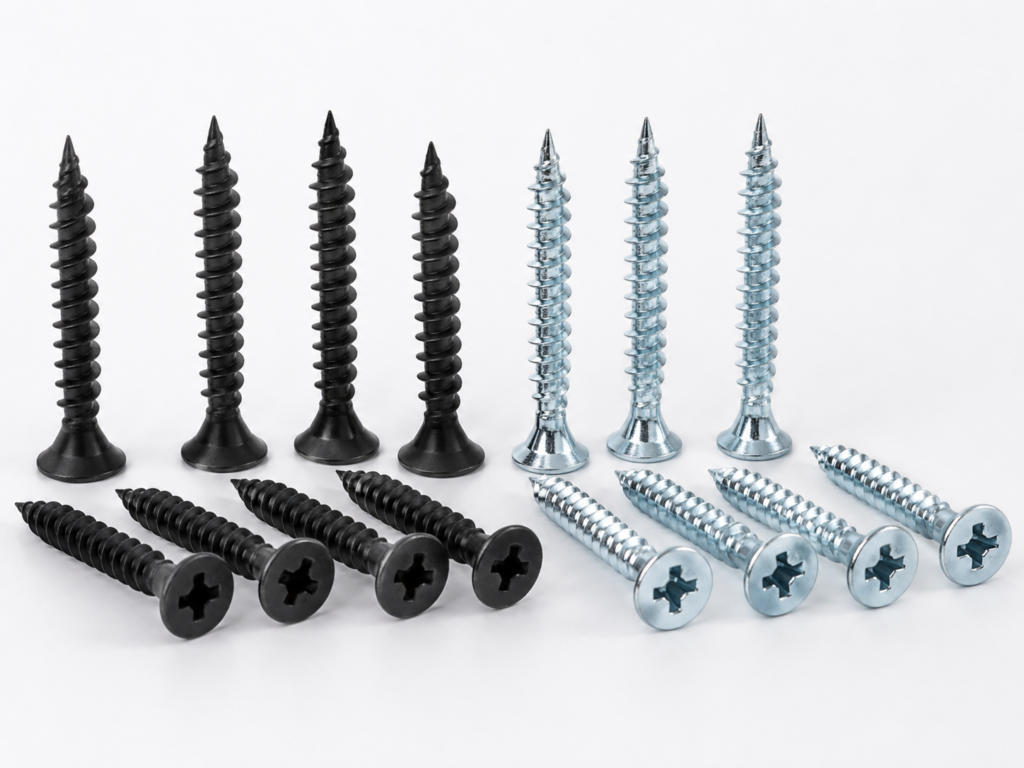
Coating finish is important for appearance and surface protection. Black phosphate drywall screws are commonly used in interior drywall and gypsum board applications. Zinc coated drywall screws are often preferred when a bright finish and surface protection are needed.
A buyer should not select coating only by color. The project environment, storage condition, and application should be considered. A reliable manufacturer should clearly explain available coating options so the buyer can choose the right product.
Poor Screw Head Quality
Most drywall screws use a bugle head design. The head should sit neatly on the board surface without tearing the paper layer or damaging the finish. If the head is poorly shaped, installers may face difficulty during driving, and the final surface may not look clean.
For gypsum board and plasterboard work, clean finishing is important. Poor head quality can affect both appearance and installation speed.
Weak Thread Design
Thread design controls grip. Coarse thread drywall screws are commonly used for wood studs, while fine thread drywall screws are commonly used for metal studs. If the thread is not sharp or consistent, the screw may slip, strip, or fail to hold properly.
This is why buyers should ask for thread type and application suitability before selecting a drywall screw manufacturer.
Poor Packaging for Bulk Buyers
Packaging is very important for dealers, distributors, wholesalers, and export buyers. Good packaging helps with product identification, storage, handling, and transportation. Poor packaging can create confusion in stock movement and may affect product condition before use.
Bulk buyers should ask about carton details, quantity information, labeling, and packaging support before placing a large enquiry.
Common Types of Drywall Screws
Black Phosphate Drywall Screws
Black phosphate drywall screws are commonly used for interior gypsum board and plasterboard fixing. They are widely used in wall partitions, false ceilings, and general drywall installation work.
Buyers usually choose these screws for interior applications where a black finish is acceptable and suitable for the project requirement. They are often used by contractors, fit-out teams, and interior construction workers.
Zinc Coated Drywall Screws
Zinc coated drywall screws have a bright surface finish and are often used where buyers need a cleaner appearance and surface protection. Dealers and distributors may prefer zinc coated options when product display, packing, and general supply appearance matter.
These screws are useful for buyers who want drywall screws with a clear coating finish and easy product identification.
Self Drilling Drywall Screws
Self drilling drywall screws are used for suitable light-gauge metal stud applications. The drilling point helps the screw enter metal framing without separate pre-drilling in suitable conditions.
These screws are commonly searched as self drilling drywall screws, drywall screws for metal studs, or self drilling gypsum screws. Buyers should confirm the metal thickness and application before selection.
Self Tapping Drywall Screws
Self tapping drywall screws create their own thread while being driven into suitable material. They are used in fastening applications where easy driving and reliable grip are important.
The exact use depends on the board, frame, and installation requirement. Buyers should check product specifications before ordering.
Coarse Thread Drywall Screws
Coarse thread drywall screws are commonly used for wood studs and timber frames. The wider thread design helps provide stronger grip in wood-based materials.
These screws are suitable for buyers searching for drywall screws for wood studs or board fixing to timber framing.
Fine Thread Drywall Screws
Fine thread drywall screws are commonly used for metal studs and light metal framing. The closer thread pattern helps the screw engage properly with metal framing systems.
Buyers working with ceiling channels, metal studs, and partition frames may need fine thread drywall screws instead of coarse thread options.
Comparison Table: Drywall Screw Types and Uses
| Screw Type | Common Application | Buyer Benefit |
| Black phosphate drywall screws | Interior gypsum board and plasterboard fixing | Clean finish for interior drywall work |
| Zinc coated drywall screws | General board fixing and supply needs | Bright finish and surface protection |
| Self drilling drywall screws | Light-gauge metal studs and frames | Faster fixing in suitable metal applications |
| Self tapping drywall screws | Board and frame fastening | Easy driving and reliable grip |
| Coarse thread drywall screws | Wood studs and timber frames | Better hold in wood-based applications |
| Fine thread drywall screws | Metal studs and ceiling channels | Better suitability for light metal framing |
Manufacturer vs Supplier vs Exporter: What Is the Difference?
Buyers often use the terms drywall screw manufacturer, drywall screw supplier, and drywall screw exporters together. These terms are related, but they do not always mean the same thing.
| Term | Meaning | Buyer Focus |
| Drywall Screw Manufacturer | Focuses on product manufacturing and quality | Screw design, coating, strength, and consistency |
| Drywall Screw Supplier | Focuses on supply and buyer support | Availability, packaging, bulk orders, and communication |
| Drywall Screw Exporters | Focuses on international buyer enquiries | Export packing, product details, and enquiry coordination |
A contractor may need application guidance. A dealer may need product availability and packaging details. A distributor may need regular bulk supply support. An export buyer may need clear specifications, packing information, and communication before placing an enquiry.
This is why buyers should understand their purpose before choosing a company. If the requirement is product quality and technical clarity, the manufacturer role is important. If the requirement is supply coordination, the supplier role matters. If the requirement is international enquiry support, the exporter role becomes important.
How to Choose the Right Drywall Screw Manufacturer
Check Product Specifications
Before selecting a manufacturer, buyers should ask for clear product specifications. These may include screw size, coating finish, head type, thread type, point type, and recommended application.
Clear specifications help buyers avoid wrong purchases. For example, if a buyer needs screws for metal studs, the thread and point type should match that application. If the buyer needs screws for wood studs, coarse thread may be more suitable.
Match Screw Type With Application
The screw should match the board and frame material. Gypsum board, plasterboard, sheetrock, wallboard, metal studs, wood studs, and ceiling channels may require different screw choices.
A reliable drywall screw manufacturer should help buyers understand which product is suitable for each application instead of giving one general product for all uses.
Compare Coating and Finish Options
Buyers should compare black phosphate drywall screws, zinc coated drywall screws, and other available coating options based on project need. The finish should match the installation environment and buyer preference.
Coating is not only about color. It affects surface appearance, storage suitability, and buyer confidence.
Check Thread Design
Thread design is one of the most important factors in drywall screw performance. Coarse thread is commonly used for wood framing, while fine thread is commonly used for metal framing.
When the thread is inconsistent or weak, the screw may not hold properly. Bulk buyers should check thread quality before placing large orders.
Check Packaging Support
Packaging matters for dealers, distributors, wholesalers, and export buyers. Good packaging helps with product storage, stock movement, and product identification.
Buyers should ask:
• What is the packing quantity?
• Are carton details available?
• Is the packaging suitable for bulk handling?
• Are product details clearly mentioned?
• Can the supplier support dealer or export-related packing needs?
Check Communication Quality
Good communication is important, especially for bulk and export enquiries. A reliable company should answer product questions clearly and help buyers understand the right screw option.
If communication is unclear before ordering, it may become more difficult after ordering. Buyers should choose a company that provides product details, packaging information, and enquiry support in a simple and clear way.
FAQs About Drywall Screw Manufacturers
What is a drywall screw manufacturer?
A drywall screw manufacturer is a company that produces or supports the production of screws used for gypsum board, plasterboard, ceiling, partition, wall lining, and interior construction applications.
Which drywall screws are best for gypsum board?
Black phosphate drywall screws are commonly used for interior gypsum board fixing. The best screw depends on board thickness, frame material, and application type.
What is the difference between coarse thread and fine thread drywall screws?
Coarse thread drywall screws are commonly used for wood studs, while fine thread drywall screws are commonly used for metal studs and light-gauge metal framing.
Are self drilling drywall screws used for metal studs?
Yes, self drilling drywall screws are used for suitable light-gauge metal studs and metal framing applications. Buyers should confirm material thickness and screw suitability before ordering.
What is the difference between black phosphate and zinc coated drywall screws?
Black phosphate drywall screws are commonly used for interior board fixing. Zinc coated drywall screws have a bright finish and provide surface protection depending on application and storage conditions.
How do I choose a drywall screw supplier or manufacturer?
Check product specifications, coating options, thread types, packaging support, bulk enquiry support, and communication quality. Buyers should also match the screw with the actual application.
Can drywall screws be supplied for bulk and export enquiries?
Yes. Dealers, distributors, wholesalers, and export buyers can request drywall screws with product details, packaging information, quantity support, and export-related enquiry guidance.
Final Thoughts
Choosing the right drywall screw manufacturer helps buyers avoid common issues such as poor grip, wrong coating selection, weak thread design, screw breakage, and packaging problems. A good manufacturer should provide clear product information, suitable screw types, coating options, and buyer support for construction and bulk supply needs.
For contractors, dealers, distributors, wholesalers, and export buyers, the best approach is to compare product specifications before placing an enquiry. Price is important, but screw quality, application suitability, packaging, and communication are also important.
Drywall screws are small products, but they support the strength and finish of interior construction work. By choosing the right product and the right manufacturer, buyers can improve installation quality, reduce confusion, and make better supply decisions.
For product details, packaging support, bulk enquiries, or export-related product information, buyers can use the Contact page to request suitable drywall screw guidance.