
Complete Guide to
Drywall Screw Sizes, Types
and Technical Specifications

Learn how drywall screw sizes are measured, compare common gauges and lengths, understand fine-thread and coarse-thread options, and choose a suitable screw for gypsum board, wood studs, and metal framing.

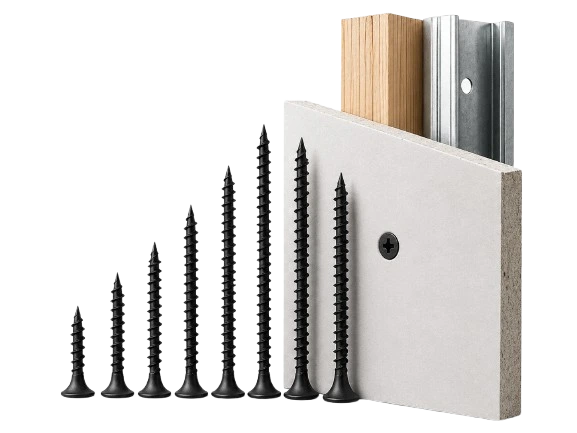
Different drywall screw sizes displayed beside gypsum board, wood studs, and metal framing

1. Introduction: Understanding Drywall Screw Sizes

Drywall screw sizes vary by gauge, length, thread type, board thickness, and framing material. Choosing the correct size helps the screw pass through the gypsum board and engage properly with the supporting wood stud or metal frame.

A screw that is too short may not provide enough engagement with the framing material. A screw that is unnecessarily long may increase installation difficulty and could interfere with concealed services behind the wall. Proper screw selection also helps reduce over-driving, surface-paper damage, and inconsistent fastening.

Drywall screw sizes are commonly identified by:

Screw gauge or diameter

Overall screw length

Fine-thread or coarse-thread 

Framing material

Number and thickness of gypsum board layers

This guide explains how drywall screw sizes are measured, compares common gauges and lengths, and provides practical selection guidance for gypsum board, wood studs, and light-gauge metal framing.

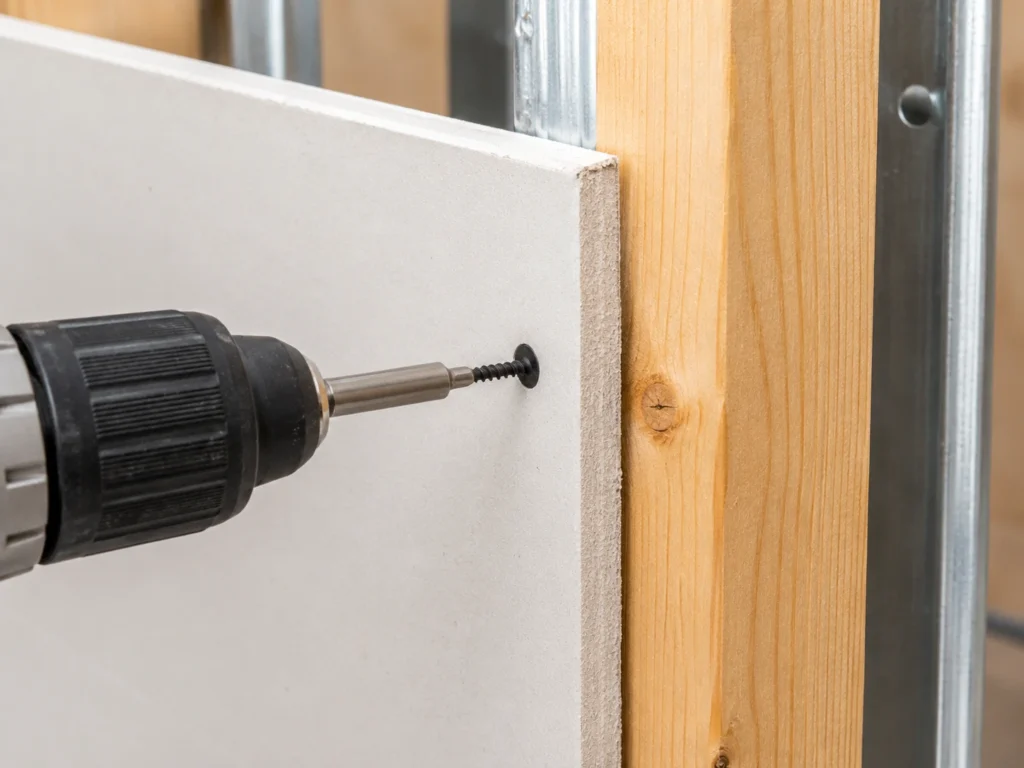
Drywall screw being installed through gypsum board into a wooden stud

Quick Note:

Drywall screw sizes and suitable applications may vary by product range, board system, framing material, and project specification. Always confirm the required size before installation.

2. Drywall Screw Sizes: Quick Reference Guide

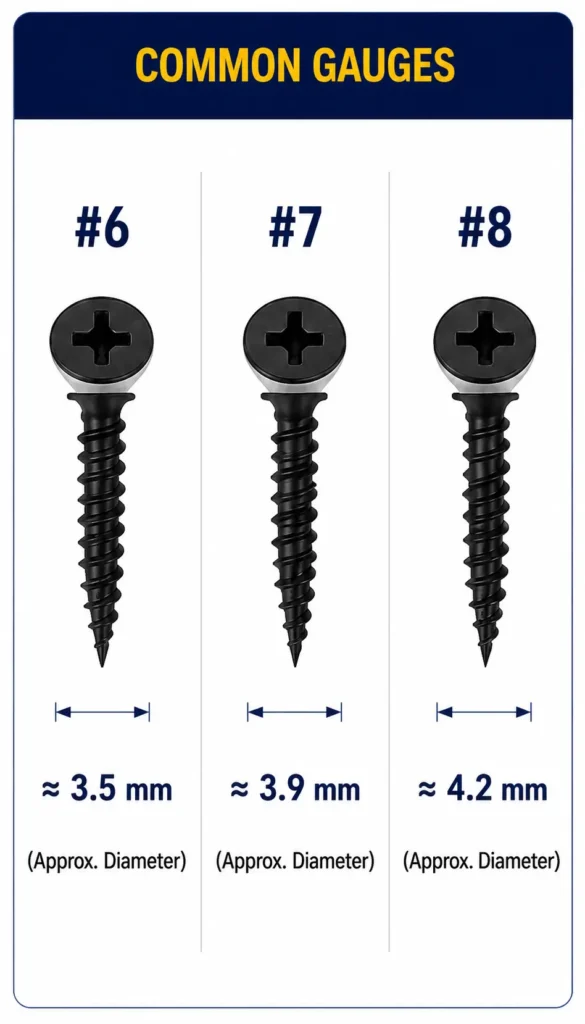
Drywall screws are available in different gauges, lengths, and thread types for various gypsum board applications. Screw gauge indicates the approximate diameter, while screw length should be selected according to board thickness, framing material, and project requirements.

Common drywall screw gauges showing #6, #7, and #8 with approximate diameters
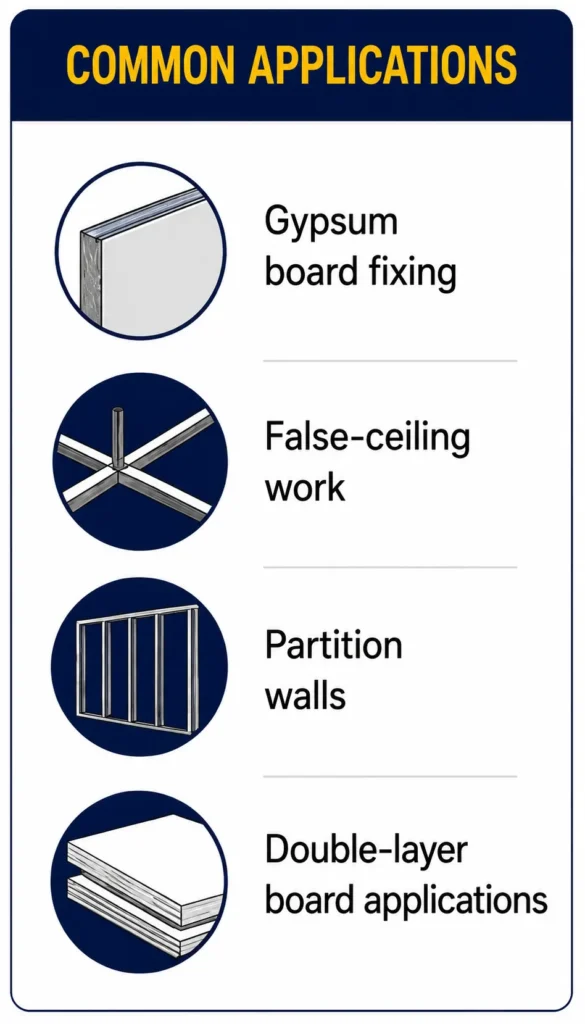
Common drywall screw applications including gypsum board fixing, false ceilings, partition walls, and double-layer boards

3. How Drywall Screw Sizes Are Measured

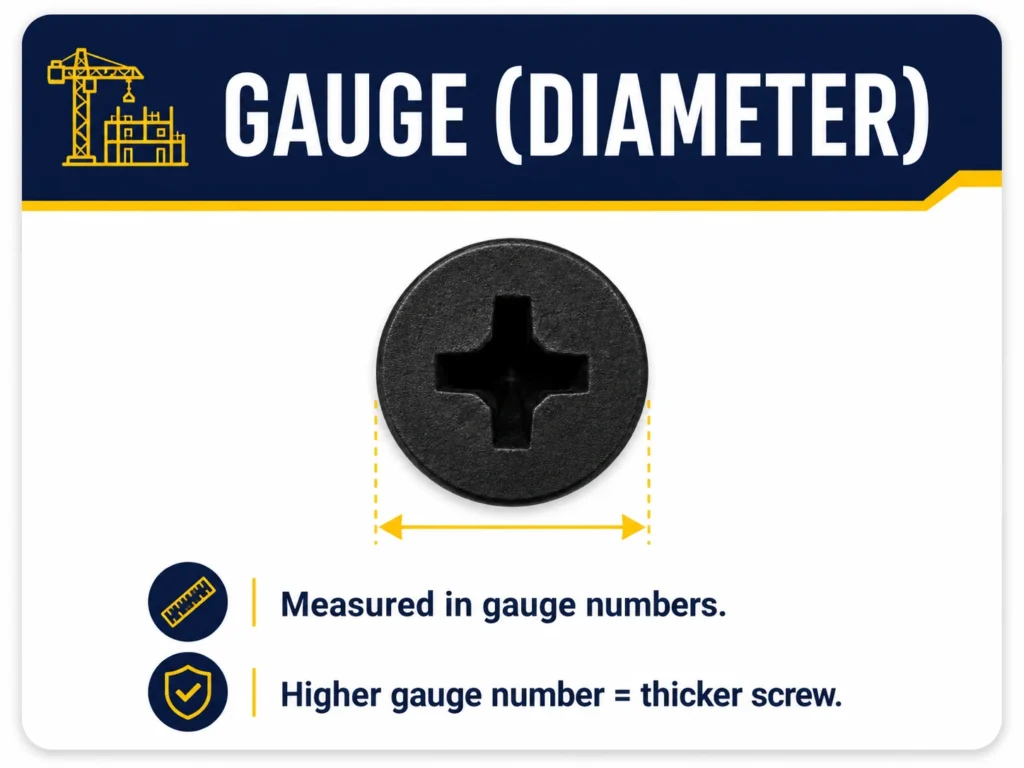
Drywall screw gauge measurement showing screw diameter and gauge thickness
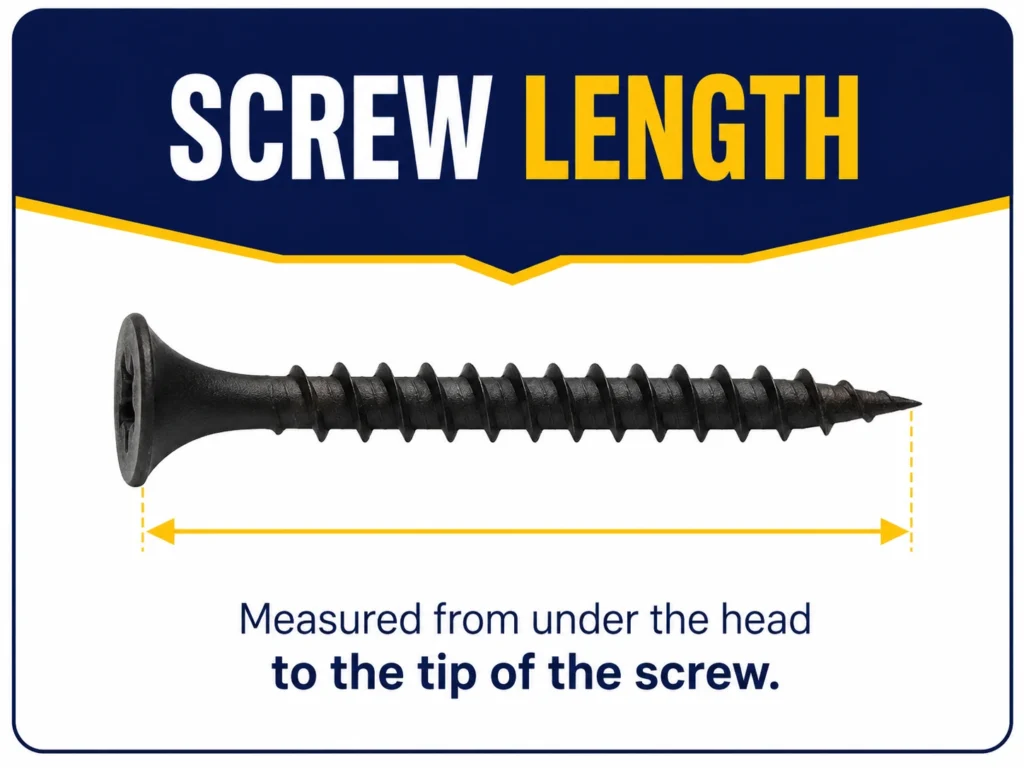
Drywall screw length measured from under the bugle head to the sharp tip
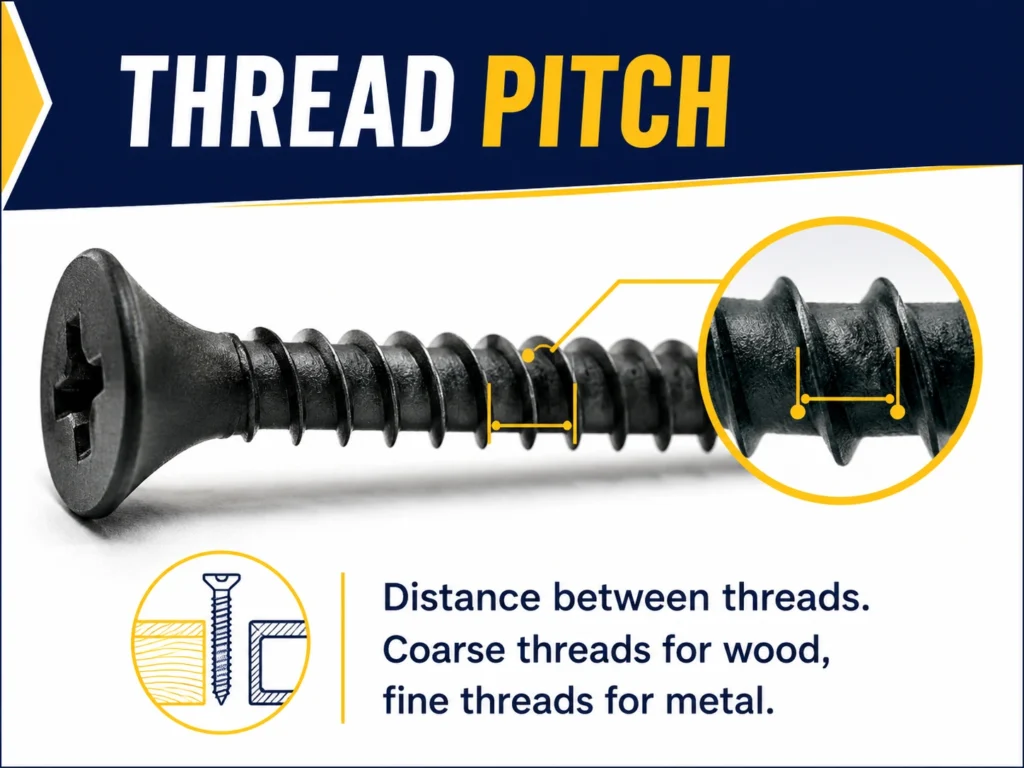
Drywall screw thread pitch showing the distance between adjacent screw threads

4. Technical Specifications Table

Screw Gauge Approx. Diameter Common Length Range Typical Framing Use Thread Type
#6 Approx. 3.5 mm 25–50 mm Gypsum board fixed to wood or light-gauge metal framing Fine or Coarse
#7 Approx. 3.9 mm 25–63 mm General drywall and interior framing applications Fine or Coarse
#8 Approx. 4.2 mm 32–75 mm Thicker boards, multi-layer systems, or project-specific use Fine or Coarse
Note: Available gauges, lengths, and thread options may vary by manufacturer, product range, board system, framing material, and project specification.

5. Drywall Screw Length Guide by Board Thickness

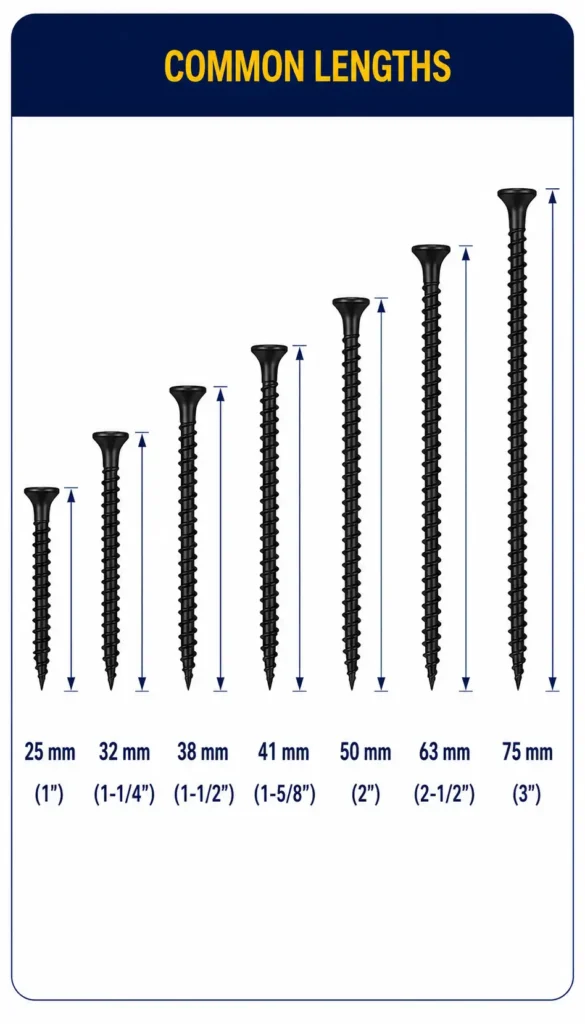
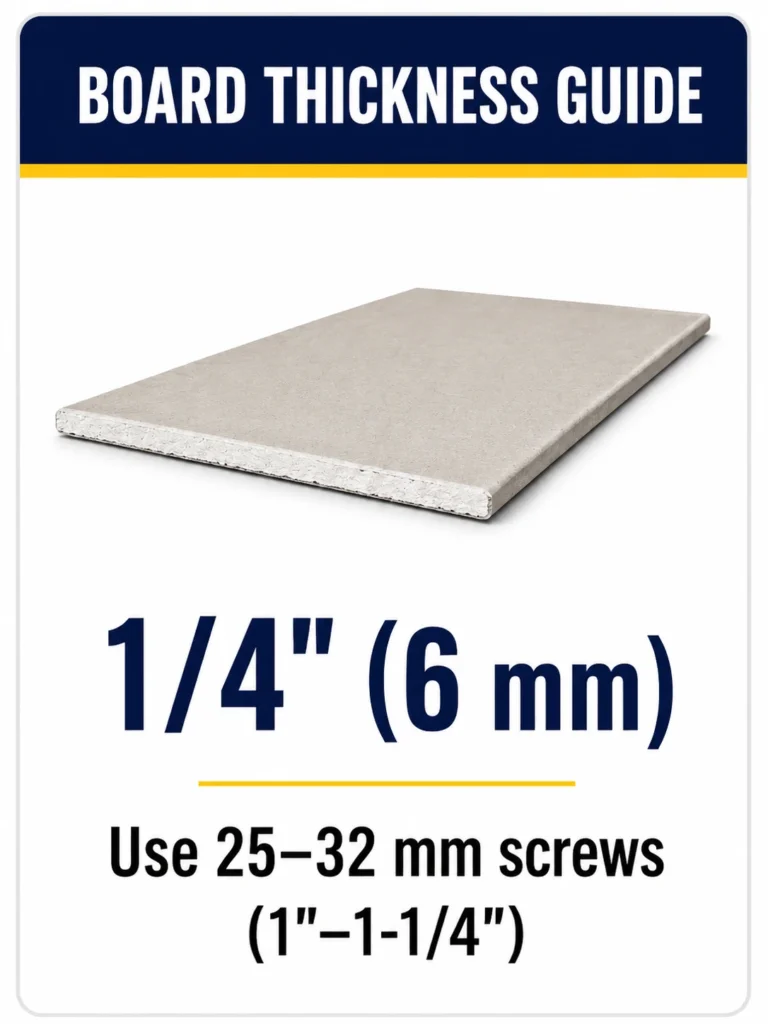
Quarter-inch gypsum board with a typical 25 to 32 mm drywall screw length range
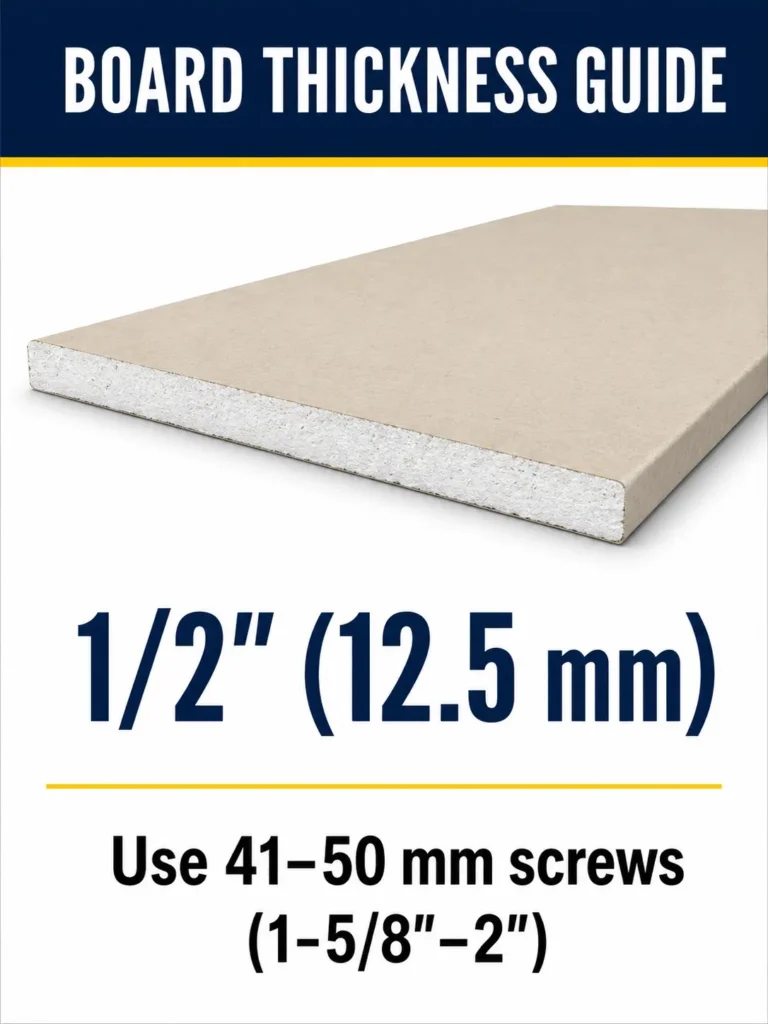
Half-inch gypsum board with a typical 41 to 50 mm drywall screw length range
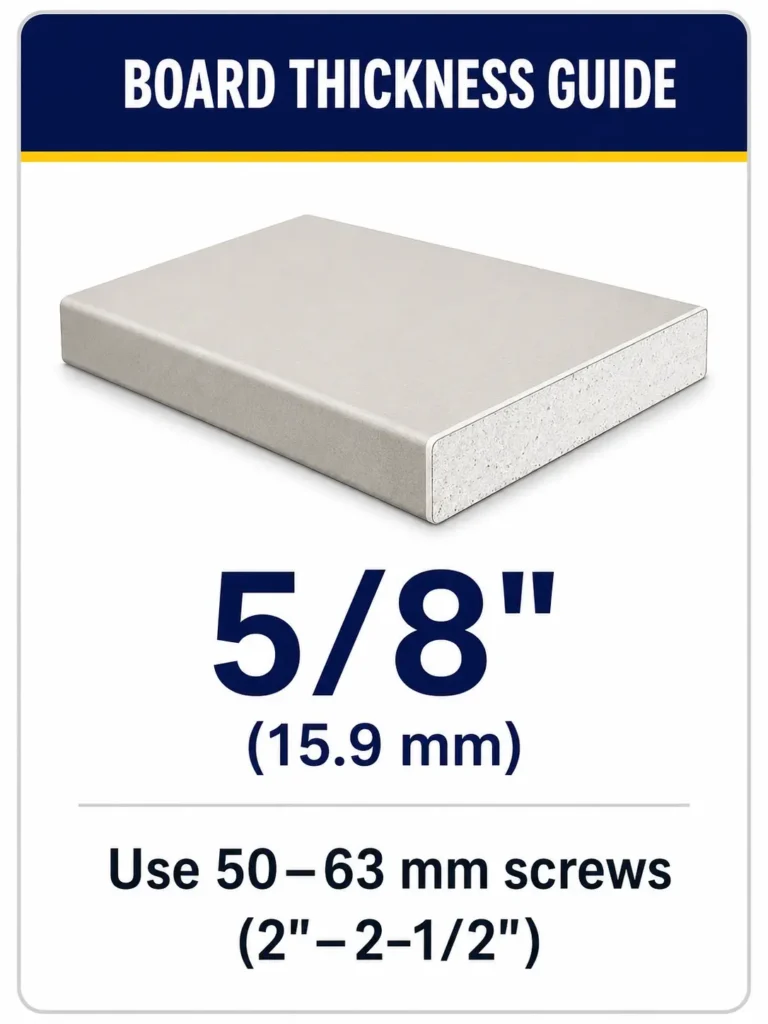
Five-eighth-inch gypsum board with a typical 50 to 63 mm drywall screw length range
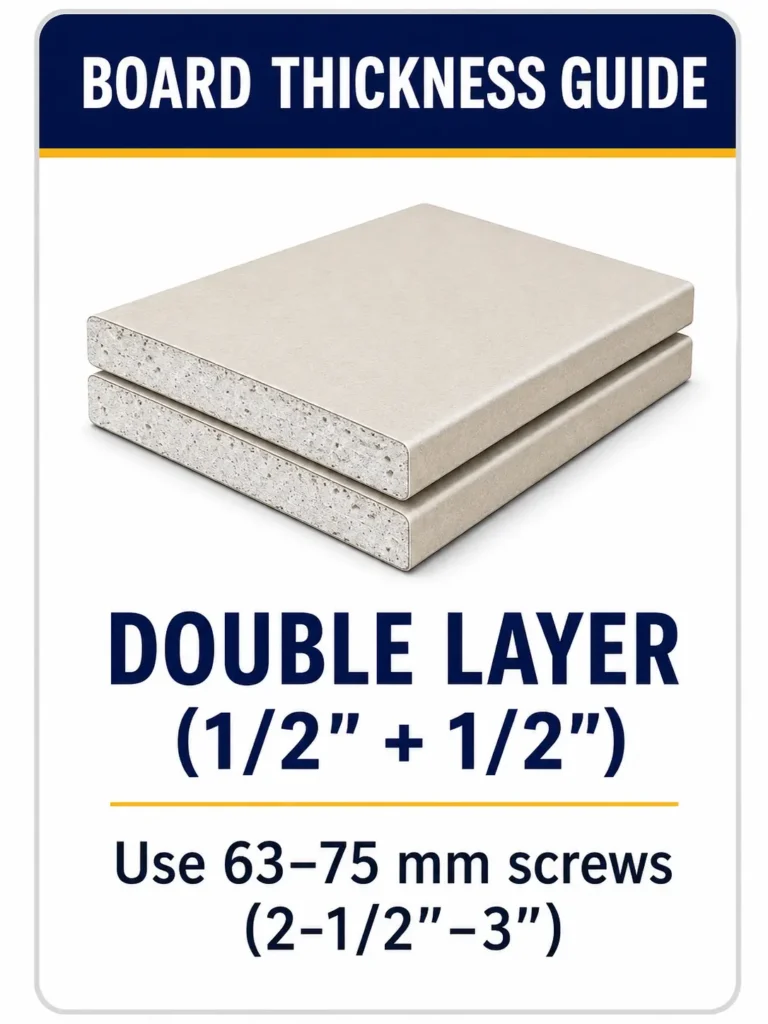
Double-layer gypsum board with a typical 63 to 75 mm drywall screw length range

6. Wood Studs vs Metal Framing

The framing material plays an important role in drywall screw selection. Coarse-thread screws are commonly used with wood studs, while fine-thread screws are generally selected for light-gauge metal framing. length based on board thickness and required frame engagement

Wood Studs

Light-Gauge Metal Framing

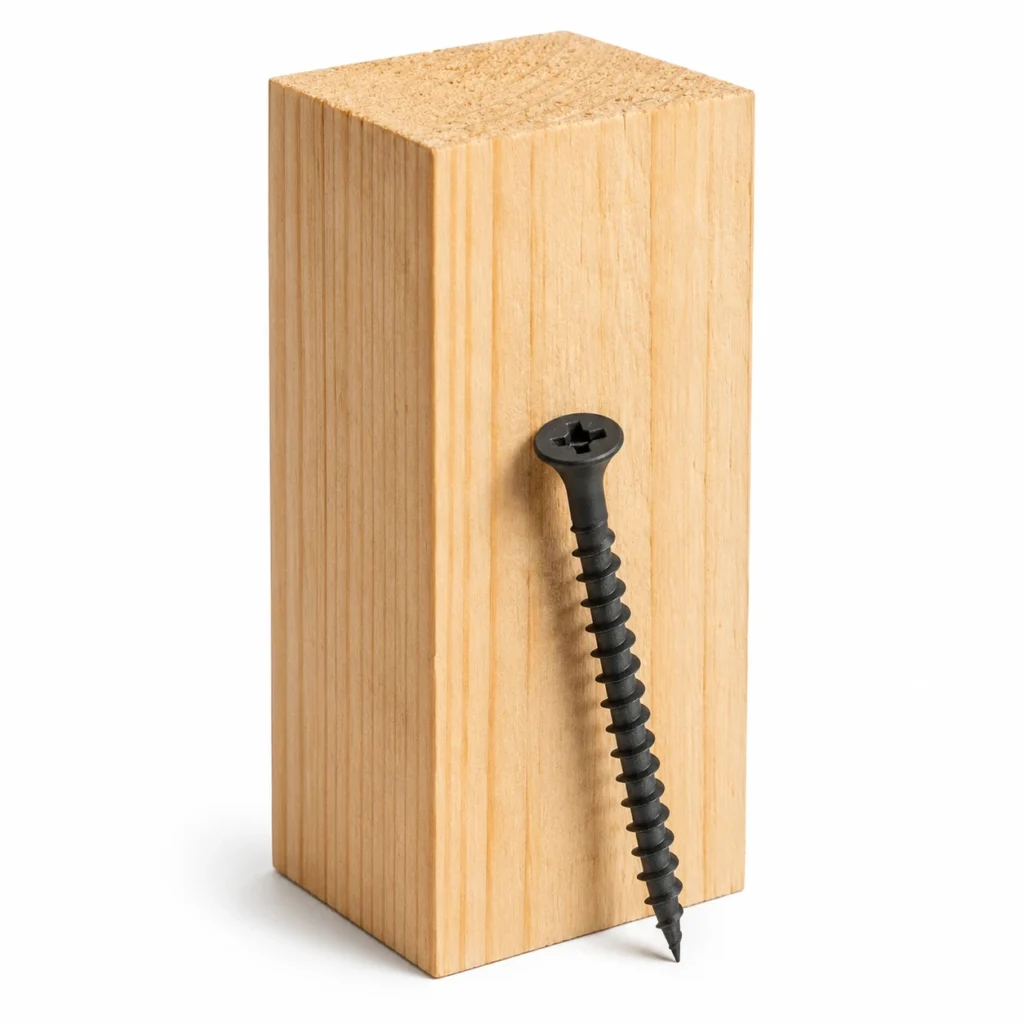
Coarse-thread drywall screw displayed beside a wooden stud for gypsum board framing
  • Coarse-thread drywall screws are commonly used
  • Wider threads help engage wood fibres
  • Suitable for gypsum board fixed to timber framing
  • Select the screw length based on board thickness and required frame engagement
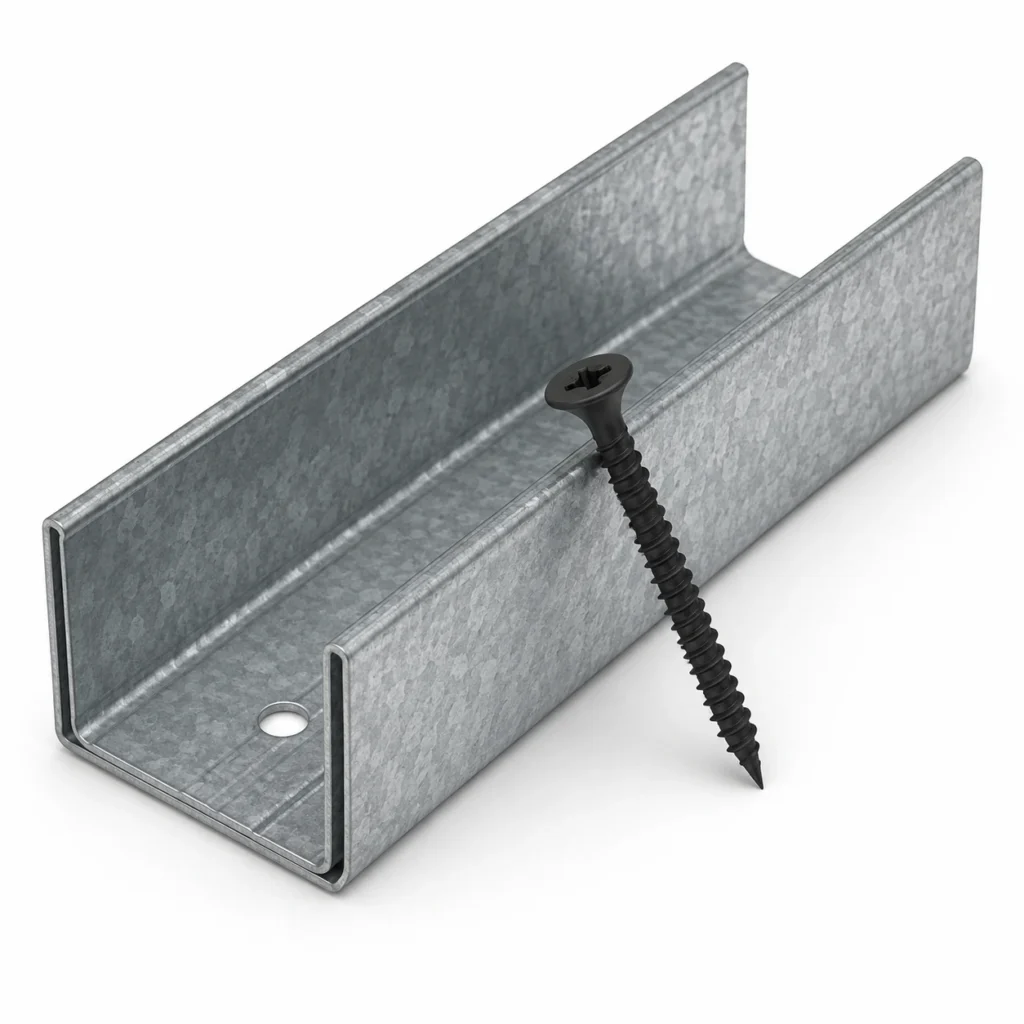
  • Fine-thread drywall screws are generally selected
  • Tighter threads help engage thin metal framing
  • Commonly used in partition walls and false-ceiling systems
  • Confirm the suitable screw type for the specified metal thickness

7. Black-Zinc and Zinc Finish Options

Drywall screws may be supplied in Black-Zinc and Zinc finishes. The suitable finish should be selected according to the product specification, intended application, buyer requirements, and project conditions.

Black-Zinc Finish

Zinc Finish

  • Provides a dark surface appearance
  • Selected where a Black-Zinc finish is specified
  • Suitable for different interior fastening requirements
  • Final performance depends on coating specification and installation conditions
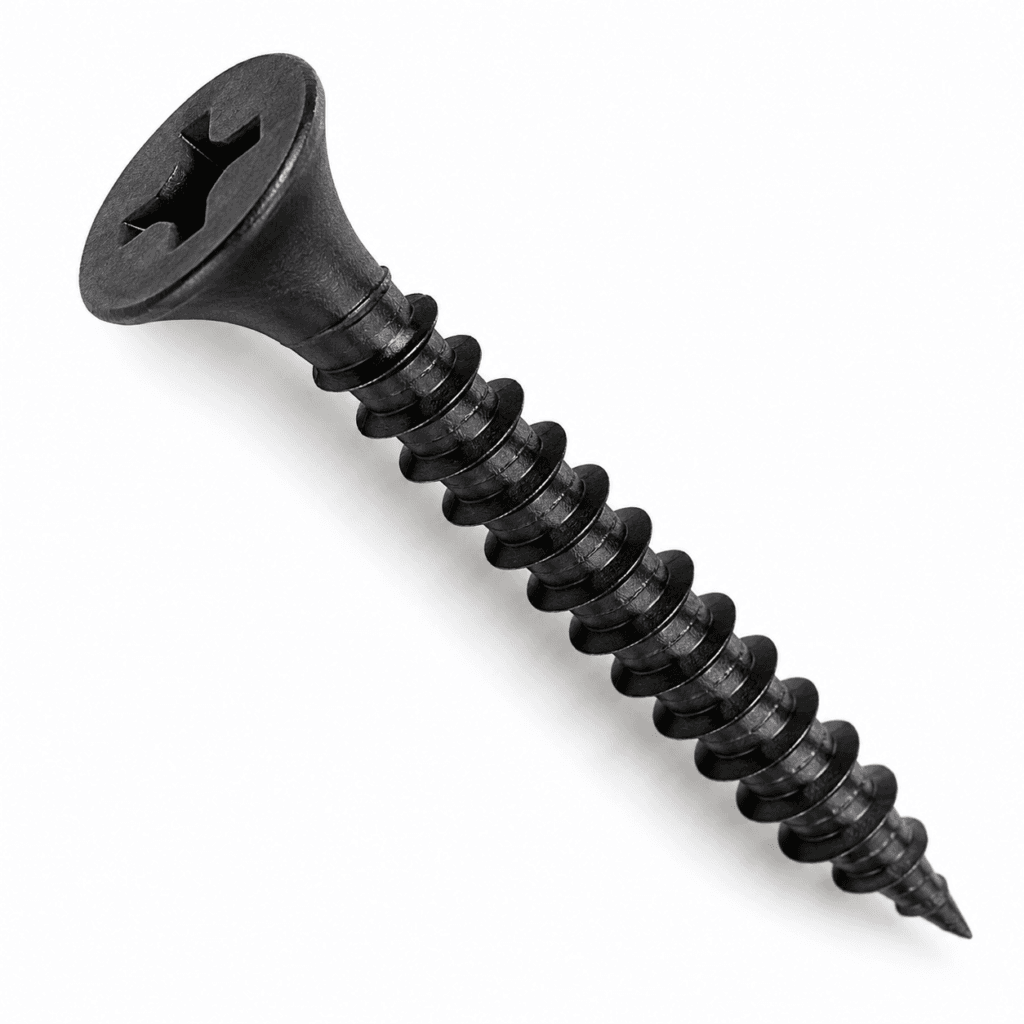
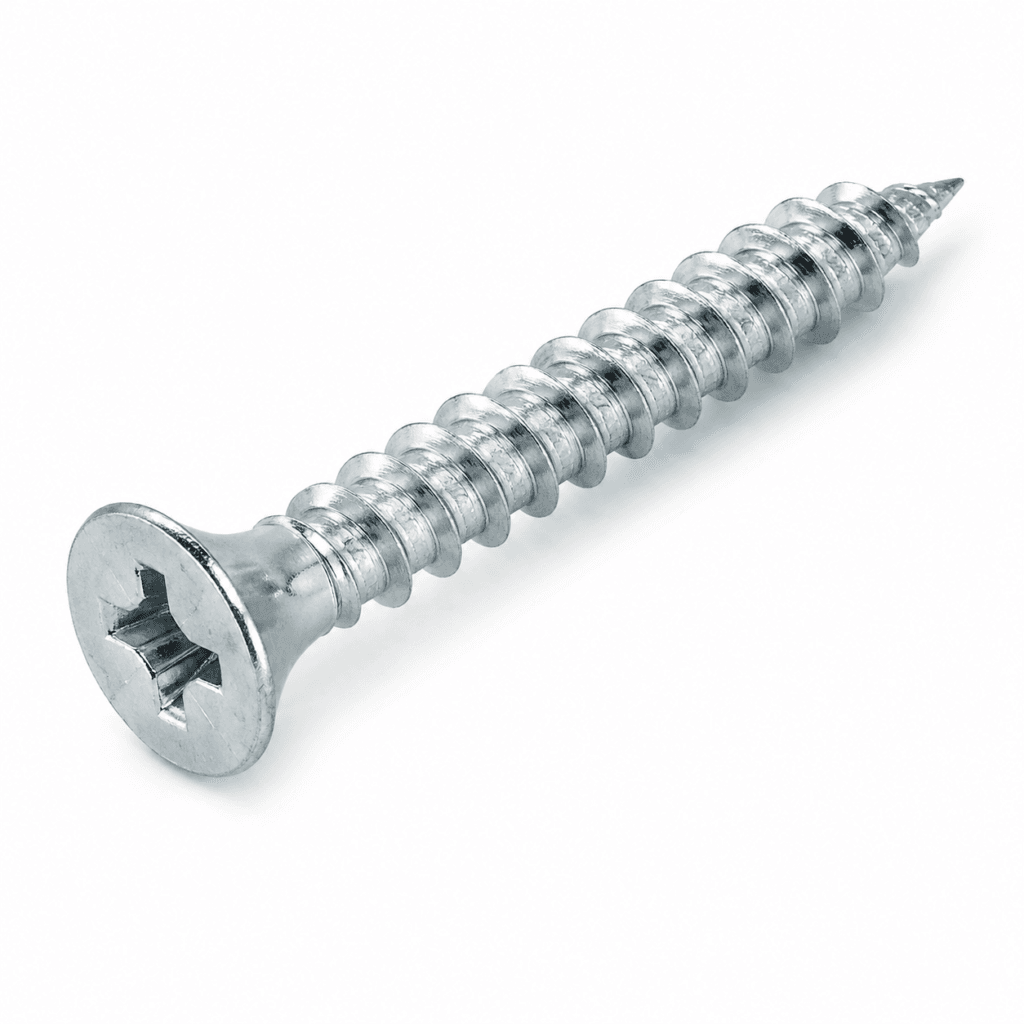
Zinc-finished drywall screw with a bright metallic surface on a white background
  • Provides a bright metallic appearance
  • Selected where a Zinc finish is specified
  • Used according to product and project requirements
  • Corrosion performance depends on coating specification and exposure conditions

8. Frequently Asked Questions

What is the most common drywall screw size?

Common drywall screw sizes vary by board thickness, framing material, product range, and project specification. For standard interior applications, #6 and #7 screws in lengths such as 25 mm, 32 mm, 38 mm, and 41 mm are commonly available. Always confirm the required size for the specific board and framing system.

For 1/2-inch gypsum board, 32–41 mm screws may be used as a general starting range. The final size should provide suitable engagement with the wood stud and must follow the board manufacturer’s instructions and project requirements.

Drywall screws are mainly associated with interior gypsum board systems. Outdoor or exposed environments may require fasteners specifically rated for moisture, corrosion, and exterior use. Always verify the coating specification and application suitability before installation.

Coarse-thread screws have wider thread spacing and are commonly used with wood studs. Fine-thread screws have tighter thread spacing and are generally selected for light-gauge metal framing.

Finish suitability depends on the coating specification, exposure level, applicable standards, and project requirements. Black-Zinc or Zinc finishes should not be described as universally suitable for coastal or humid conditions without product-specific corrosion data.

9. Conclusion

Choosing the right drywall screw size requires more than selecting a length. Screw gauge, thread type, board thickness, number of layers, framing material, and finish should all be considered together.

Coarse-thread screws are commonly selected for wood studs, while fine-thread screws are generally used with light-gauge metal framing. Screw length should be chosen so the fastener passes through the gypsum board and engages properly with the supporting frame. Available gauges, lengths, thread patterns, and finishes may vary by manufacturer and product range.

For a basic overview of drywall screw uses, applications, and selection factors, read our guide on what are drywall screws.